
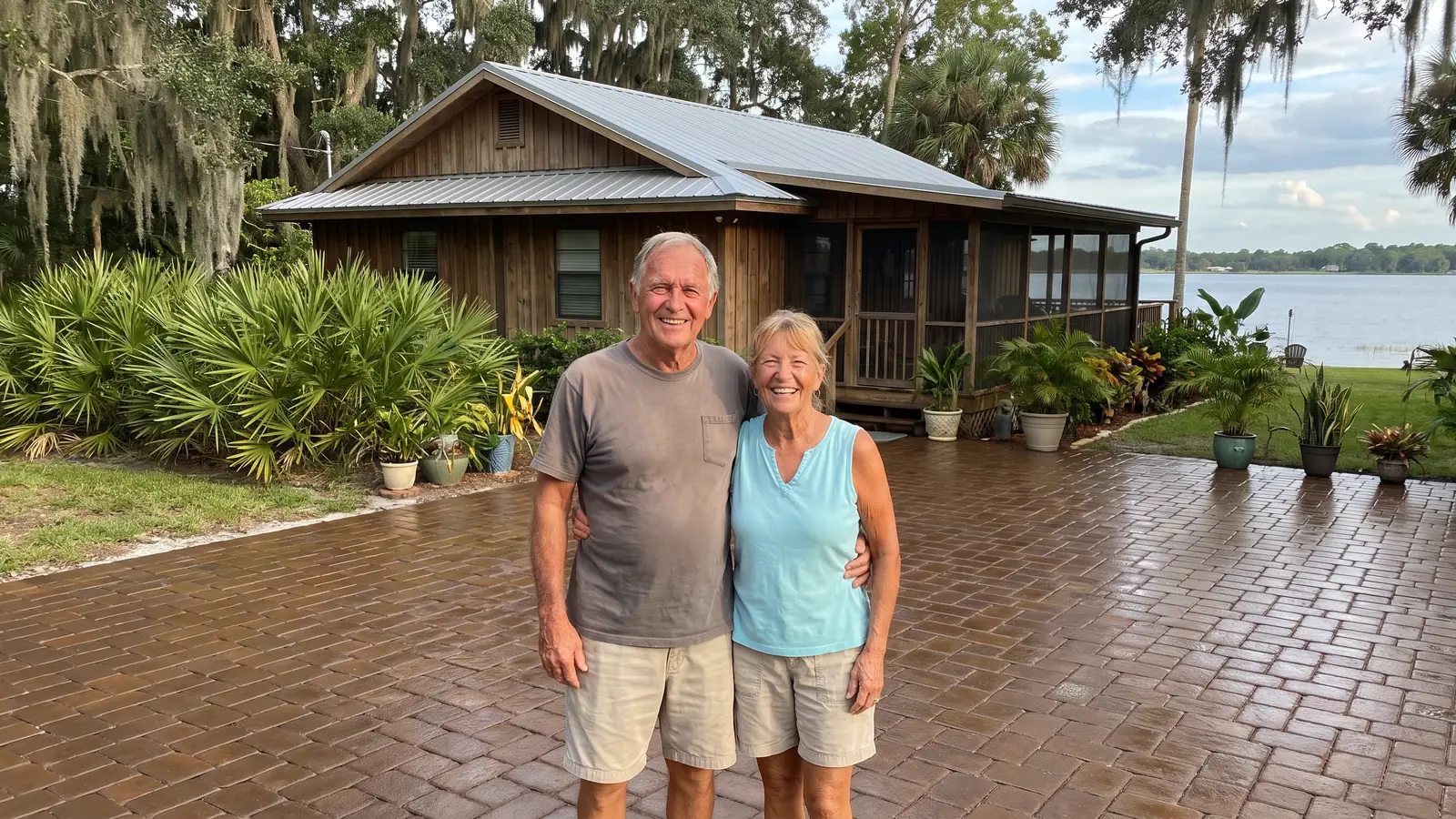
Paver sealing for Fleming Island homes
Paver Sealing in Fleming Island, FL
Fleming Island pavers at Margaret's Walk or Eagle Harbor can get a free sealing estimate, so call (386) 977-8354.
- Brings out deeper paver color
- Fresh joint sand helps lock pavers in place
- Gives weeds less room to grow
- Makes the surface easier to keep clean
- Free estimate, no obligation
Request a Free Estimate
Free, no obligation.
Fast, careful paver sealing in Fleming Island
Paver sealing is available across Fleming Island, from Hibernia and Margaret's Walk to Eagle Harbor and Fleming Island Plantation. A local contractor will wash, re-sand and seal your drive, pool deck or walkway, with a free estimate first. After you call (386) 977-8354, a reply should reach you within 1 business day, usually much sooner.
Picture a driveway where the color has gone chalky and thin lines of weeds run along the joints. A cleaning, fresh sand and a new coat bring it back to one even shade. When you are ready to talk it over, you can ask for a free estimate and describe the surface you want sealed. Weeds in the joints are a sign that sand has washed out.
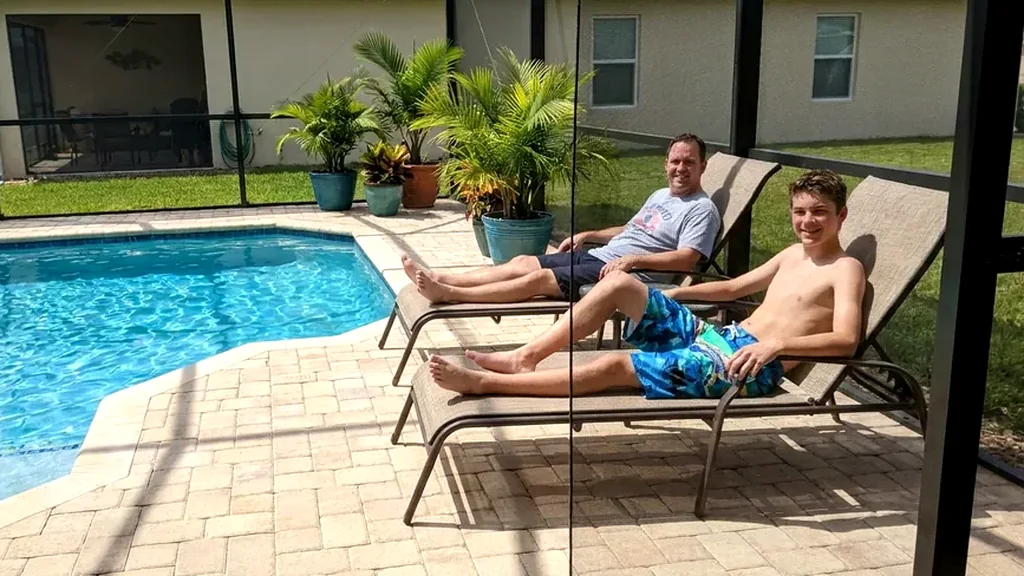
Why hire a local paver sealing contractor in Fleming Island?
The island is ringed by water and its newer streets went up on cleared ground, which is why Fleming Island homeowners often want a local contractor. To hear how that applies to your street, ask for a free estimate.
A look at your lot, free
The contractor measures your Fleming Island pavers and quotes a price. The visit costs nothing, and nothing is agreed on the spot.
Prices you can compare
Published prices in the region run $1.75 to $3.25 per square foot to clean, sand and seal. Lay your island quote beside that range.
Matte or wet look
Matte stays quiet on a front walk. A wet look adds shine near the pool, though scuffs show sooner.
Your schedule
You choose the day and the finish. Expect a reply within 1 business day, often much sooner.
Get Your Free Estimate in Fleming Island
Tell us about your pavers in Fleming Island.
Free, no obligation
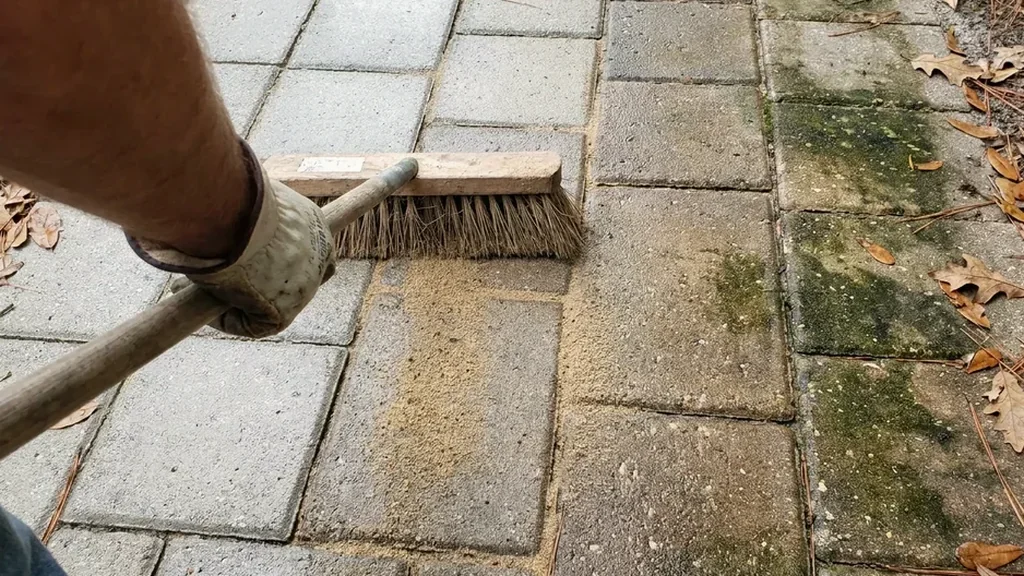
What paver problems show up most in Fleming Island?
Ground that was once an airfield
University of Florida extension says many new Florida homes sit on compacted soil, which limits how much rain the ground absorbs. Fleming Island's newer streets went up on cleared land where the Navy runways came down in the late 1990s. If your lot was graded that way, rain may sheet across the pavers instead of soaking in. Sand then leaves the joints, so point out any low or washed-out spots at the first visit. A contractor who hears that early can plan the re-sanding step with more care, and the finished drive looks even instead of patchy. Eagle Harbor, Pace Island and Fleming Island Plantation are the big names here, and each grew in its own stretch of years. Ask your builder or neighbors when your street was graded. Thunderbolt Road and Thunderbolt Elementary still carry the name of the old airfield, so the runway land is easy to place on a map.
Water on every side
The island is bordered by the St. Johns River, Doctors Lake, Black Creek and Swimming Pen Creek, and close to a third of its area is water. Pavers in damp air and shade can grow a green film. Landscape Ontario says moss and algae should stay off pavers unless heavy shade is present. A green patch on your drive therefore points to shade and moisture, and the wash has to clear it before any sealer goes on. Moccasin Slough Park, at the north end, has a canal dug almost to Doctors Lake, which shows how close water sits to many lots. The Fleming Island Marina sits on the St. Johns River at the US 17 bridge, and Black Creek is a popular canoe and kayak route.
Sand that lets go of the joints
University of Florida extension says the soils of North and Central Florida are sandy and hold little water. Fast drainage is good for a yard, but it also pulls joint sand down with every storm. The paver base sits on that same ground, so the sand beneath the surface moves too. Northeast Florida averages about 52 inches of rain a year, much of it in short, hard downpours from May to September. When joint sand drops, joints widen, soil settles in and weeds follow. Landscape Ontario suggests checking joints once a year in spring and topping up low spots with sand. University of Florida extension also notes that new home sites often use imported fill to raise the ground.
Orange streaks from sprinklers
Well water in much of Florida carries iron, and University of Florida specialists say sprinkling with it can stain surfaces orange. If your yard irrigation comes from a well, check the walk and the apron for rust-colored fans. A cleaning step removes them before sealing, because a coat laid over rust would hold it in place. Aiming the heads off the pavers helps stop new marks, and a pool deck or lanai floor catches the same spray.
A coat from an earlier owner
Hibernia Plantation has homes built from the late 1980s on, so a drive there may have been sealed more than once. Here is why it matters: water-based sealer cannot go over solvent-based sealer. The contractor needs to learn what is on the surface before picking the next product. Peeling or patchy spots are a clue that the old coat needs attention first. If you bought the home used, ask the sellers or the builder what went on, and keep any paperwork you find. A call to the builder, or a look through your closing papers, can answer the question quickly. The original Hibernia section is the exception among the island's subdivisions, so a drive there may follow a different pattern than a gated or golf-course street.
Does sealing differ between Hibernia, Eagle Harbor and Fleming Island Plantation?
It can, because the island grew in pieces and each piece has its own age and size. Hibernia Plantation, on the St. Johns River, has homes from the late 1980s and later. Fleming Island Plantation covers more than 1,600 acres with a golf course, and Eagle Harbor is a golf community of roughly 3,000 acres. When you ask for a free estimate, name the neighborhood you live in.
Margaret's Walk is a gated community at the south end of the island, with large homes along the river. Wider drives and longer walkways run more feet of joint, so total area is what sets the price. A riverfront lot may also hold more damp and shade along its edges. Call (386) 977-8354 and say roughly how big your paved area is.
Most of the island is made up of subdivisions, and subdivisions often have an association with its own rules. Some associations cover exterior color or finish. Ask yours before you pick a wet look, then ask for a free estimate so the contractor can plan around what is allowed. Ask whether it wants notice before work starts.
What does paver sealing cost in Fleming Island?
Three things set the bill on Fleming Island. One is the square footage, another is how green the surface has gotten, and the third is whatever coat is already on it. Around here, companies commonly list $1.75 to $3.25 per square foot to clean, sand and seal. To see a figure for your paved area, ask for a free estimate.
Access and repairs come next. A wide drive with room for equipment moves faster than a narrow side walk where gear is carried by hand. Pavers that have sunk are lifted and reset before sealing, and that work gets its own line. Phone (386) 977-8354 and ask which of these points matter on your Fleming Island lot.
| Paved area | Typical example | Clean, sand and seal |
|---|---|---|
| 300 sq ft | Small patio or walkway | $525 to $975 |
| 600 sq ft | Two car driveway | $1,050 to $1,950 |
| 1,000 sq ft | Large driveway or pool deck | $1,750 to $3,250 |
| 1,500 sq ft | Driveway plus pool deck | $2,625 to $4,875 |
Math based on the $1.75 to $3.25 per square foot that Northeast Florida paver companies publish. Your contractor sets the actual price after seeing the surface. Repairs, leveling and stripping failed sealer are usually extra.
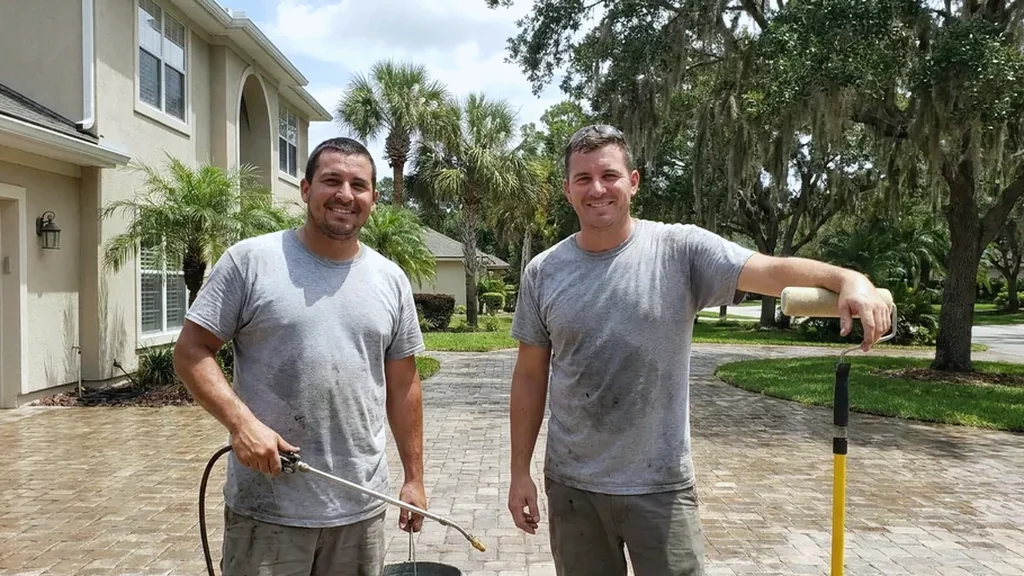
How does a paver sealing job work in Fleming Island?
Survey the lot
Before any water is sprayed, the contractor walks the drive, pool deck and walks. Low spots, loose pavers and stains get marked, and you are asked whether a coat has gone on before. Water-based sealer will not bond to a solvent-based coat, so that answer matters. Tell the contractor where rain pools on your Fleming Island lot. Walking the lot together is quick, and it prevents surprises later.
Wash it clean
The wash lifts green film, grime and any orange sprinkler marks. Corners that stay shaded get more time than the sunny middle. Beds along the edge are covered, or rinsed once the wash is done. Spray stays off the house wall where the pavers meet it. Ask what will be moved or covered first, such as chairs, planters and pool toys.
Top off the sand
Sand leaves with the wash, so the joints are refilled before any sealer goes on. Sandy island ground drains fast, which means open joints let soil in and weeds follow. Joints are topped off and the surface is swept clean. Tight joints also help pavers stay level. Plan a quick look at the joints each spring after that.
Let it dry
Sealer needs dry pavers. Most rain in this part of Florida comes between May and September in sudden bursts, so the contractor reads the forecast first. A shaded or low spot can stay wet long after the open drive dries. Checking those spots early saves a redo. Keep the sprinklers off the night before, since a wet surface delays the job.
Seal and note the date
The coat goes on last, in the matte or wet look you chose. A wet look shows scuffs sooner than matte, which matters where tires turn daily. Quotes from companies in the region run two to five years between coats. Ask for the product name and write down the day. Before the contractor leaves, walk the finished surface together and point out anything that looks off.
Complete paver services in Fleming Island
Every Fleming Island job follows the same four beats: wash, re-sand, dry, seal. Skipping a beat is how sealer ends up trapping dirt or peeling early. Each beat gets the time your pavers need, not a set clock. To ask how long yours would take, call (386) 977-8354.
Pool decks, drives and front walks are the usual surfaces. Drives take tires and runoff, decks take sun and bare feet, and walks gather shade and green film. Patios beside the lawn catch sprinkler spray. Tell the contractor which you have when you ask for a free estimate.
Choosing sealer is two decisions. First comes water-based or solvent-based, and an old solvent coat rules out a water-based product. Then comes the look, matte or wet. Matte tends to look calm on a large driveway, so call (386) 977-8354 to talk through which suits your home.
Timing follows the sky. Rain on this side of the St. Johns River falls mostly from May to September, often in short, hard storms. A job can slide a day or two, and the sides of a lot near the creeks may dry later than a sunny drive. To find a date that suits your street, ask for a free estimate.
Questions to ask before you hire
- Do you put the sealer name and coat count in writing?
- Do you fix pavers that have sunk or shifted before you seal?
- How do you handle pavers near a lake or pond where the ground stays damp?
- What do you do if rain is expected on the day of the job?
- What happens to the weeds and moss in my paver joints before the sand goes in?
- Who is on site the day of the job, and will they walk it with me at the end?
- How many days between the wash and the sealing?
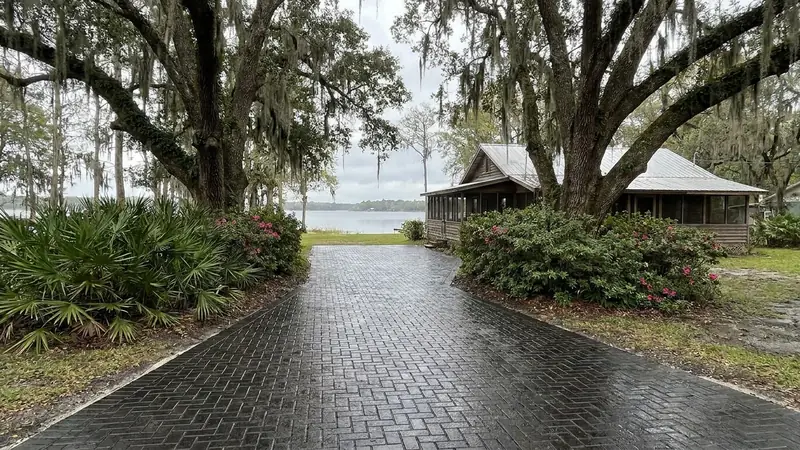
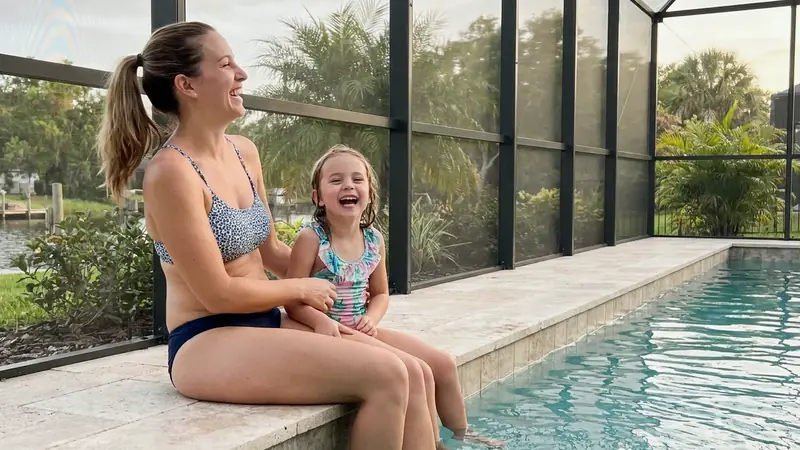
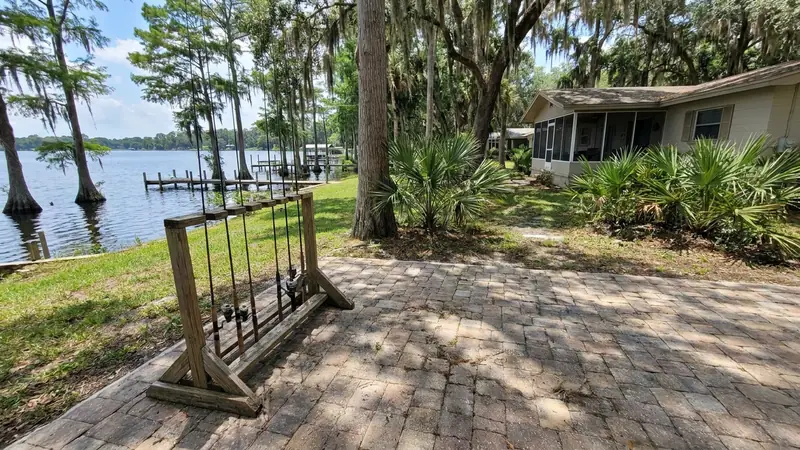
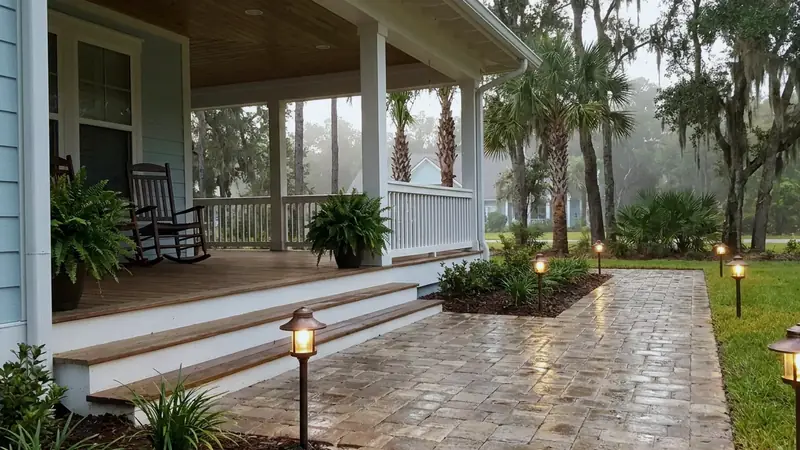
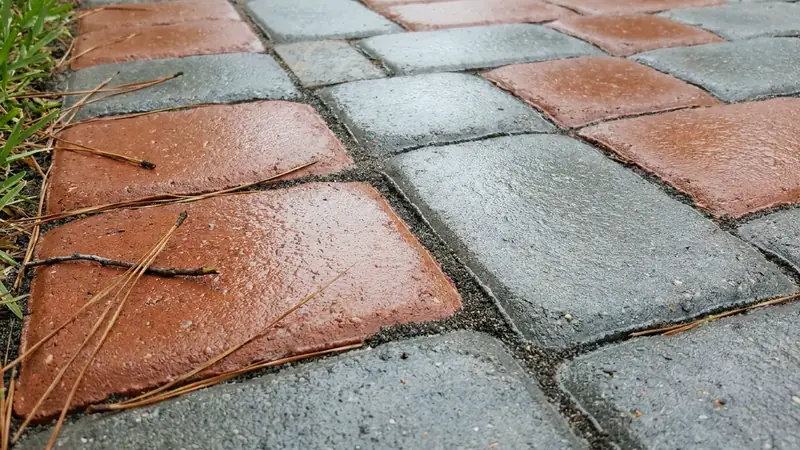
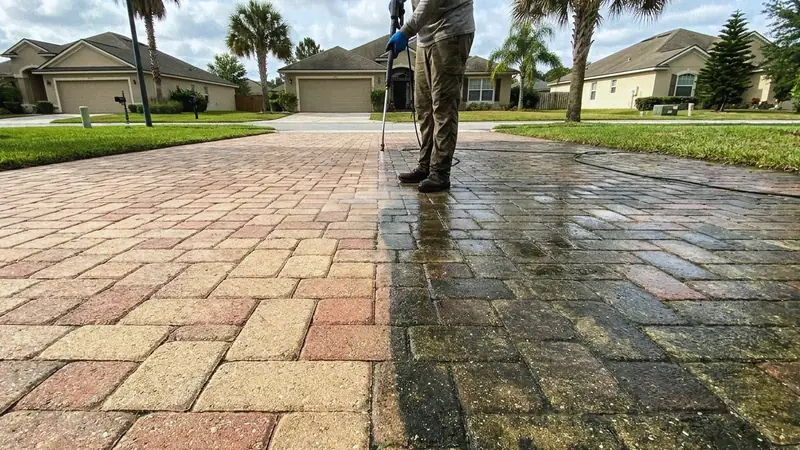
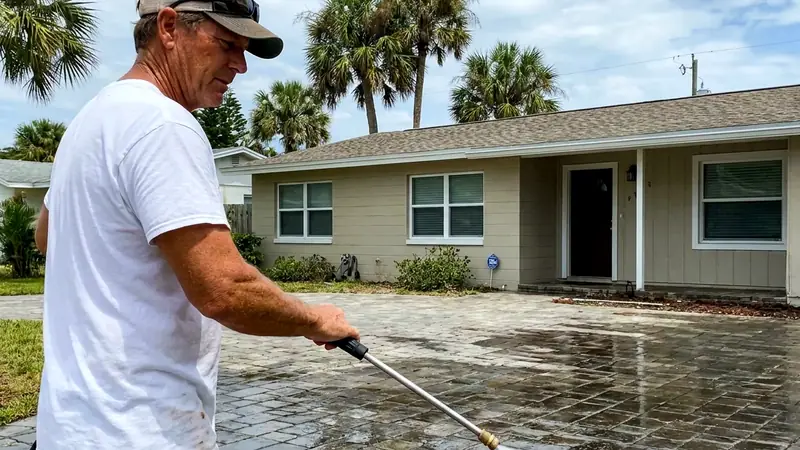
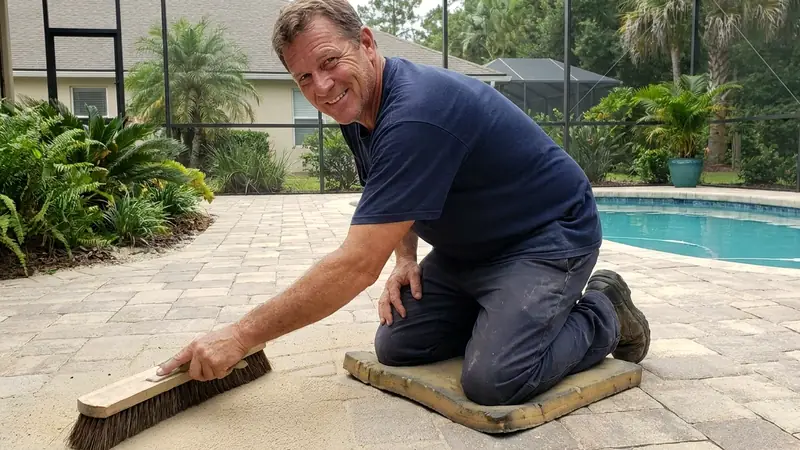
What do sealed pavers look like around Fleming Island?
Why local matters in Fleming Island
A contractor who knows Fleming Island will ask how your lot drains and how close it sits to the water. Lots near Doctors Lake or Black Creek may hold damp air and runoff longer than lots farther away. That shapes how much washing and re-sanding comes first, and it shapes how long the drying takes. Call (386) 977-8354 to reach a contractor who knows the Clay County side of the river.
Local knowledge also helps with the calendar. Rain arrives in short, hard bursts from May to September, and the drier months run from November to April. A contractor who works the island plans sealing days around both. To see how a date gets chosen for your street, ask for a free estimate.
Fleming Island has pavers of several ages, from Hibernia Plantation homes of the late 1980s to streets laid out after the runways came down. Pavers of different ages need different prep, and some carry old coats nobody wrote down. Knowing the age of a surface helps the contractor pick the wash and the sealer. If you are unsure what you have, ask for a free estimate and share roughly when the home was built.
Why does Fleming Island have an Irish plantation name like Hibernia?
Hibernia is the Latin word for Ireland, and Irish immigrant George Fleming used it for his plantation. He received a 1,000-acre grant from the Spanish governor in 1790 for his military service. The island still carries his name. Call (386) 977-8354 if your home sits near the old plantation grounds, and a free estimate follows.
Two older buildings survive from those days. Holly Cottage, built around 1897 and 1898, is the last piece of the Hibernia Winter Resort and joined the National Register in 2010. St. Margaret's Episcopal Church, a wooden Carpenter Gothic church from 1875 to 1878, is on the register too. Doctors Lake Park has a 320-foot fishing pier and Moccasin Slough Park covers 255 acres, so if you live near either one, ask for a free estimate.
Frequently Asked Questions
How much is paver sealing per square foot on Fleming Island?
Companies in the region list $1.75 to $3.25 per square foot for cleaning, sanding and sealing. Your own figure depends on square footage, green growth and any coat already on the surface. Pool decks and walkways count with the drive, so measure everything the contractor will touch. More square feet means a higher total at any rate.
Is it worth sealing pavers in Florida?
Yes. Landscape Ontario's guidance says cleaning and sealing discourage ants and weeds in the joints and bring out the color of the surface. Sandy ground drains fast on the island and shade holds damp, so that protection helps. Sealing does not end upkeep, but it slows how fast dirt, sand loss and fading catch up.
How long do paver sealers last on a Fleming Island driveway?
Quotes from companies in the region run two to five years between coats. Heavy shade and daily tires push a drive toward the short end. Ask for the product name so the next coat is a match, and note the date of each coat. If your drive is shaded most of the day, ask whether the contractor would look at it sooner than the usual span.
Is it better to spray or roll paver sealer?
Either method can work when the coverage is even and the surface is dry. Prep, product and the number of coats matter more than the tool. Ask how the sealer will go on and why, since a clear answer shows a planned job.
What are the downsides of sealing pavers on Fleming Island?
Upkeep and timing are the main ones. Sealer wears and needs another coat later, and scuffs show sooner on a wet look than on matte. It also needs a dry surface, which can push the date back after heavy rain. Those costs are small next to letting joints empty and weeds take hold. Doing it on time costs less than a full restoration later. Ask whether the quote covers a second coat, since some jobs call for two and the number changes the price.
Why do pavers on Fleming Island turn green?
Green film is algae, and algae follows shade and damp. The island is ringed by water, and trees hold shade on many lots. Landscape Ontario says moss and algae should stay off pavers unless heavy shade is present. A wash removes the film, and a sealed surface is easier to keep clean afterward. Ask the contractor to point out which side of your drive stays wettest.
Can new sealer go over my old coat?
Not every time, because a water-based product will not bond over a solvent-based one. The contractor has to learn what the pavers carry. On homes from the late 1980s and 1990s, ask the earlier owner or look for old receipts. If nobody knows, the contractor can often tell from how the surface looks and how water behaves on it. Mention any peeling or patchy shine, since those are clues.
Do I need association approval to change my paver finish on Fleming Island?
It depends on your subdivision. Many have an association that may regulate exterior color or finish, so read your association papers before you pick a wet look. If the rules are unclear, a short note to the association before the job costs less than redoing a finish. Keep the reply for your records. A pool or clubhouse area often shares rules with the whole community, so look at those first.
Ready for a Free Estimate in Fleming Island?
Call (386) 977-8354 and tell us about your pavers.
Free, no obligation