
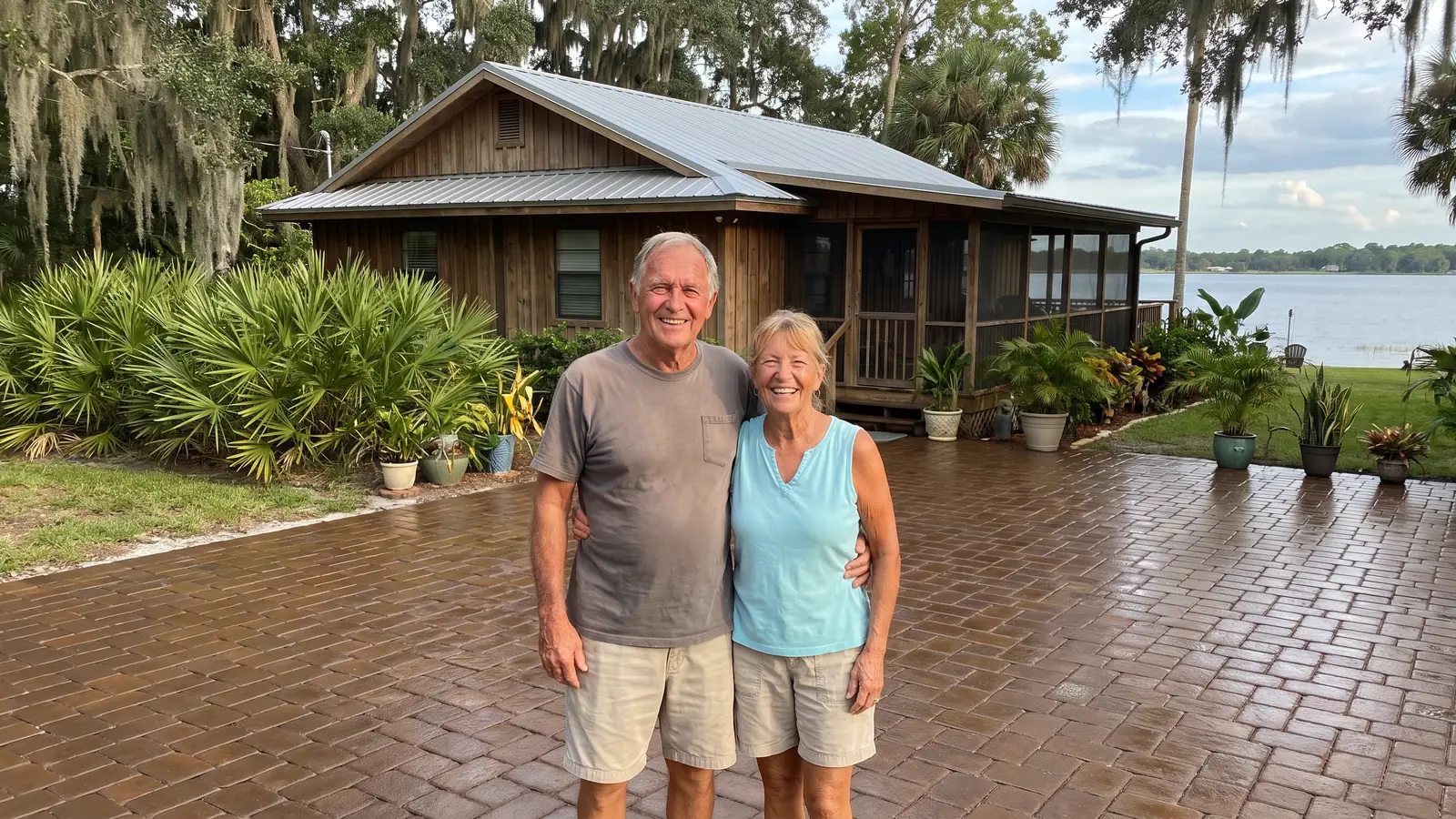
Deeper color and joints that stay put
Paver Sealing in Crescent City, FL
Free paver sealing estimates for Crescent City driveways, patios and pool decks start with a call to (386) 977-8354.
- Brings out deeper paver color
- Fresh joint sand helps lock pavers in place
- Gives weeds less room to grow
- Makes the surface easier to keep clean
- Free estimate, no obligation
Request a Free Estimate
Free, no obligation.
Who can seal pavers at my Crescent City home?
A local contractor seals pavers throughout Crescent City, FL, and you will hear back within 1 business day, usually much sooner. The estimate is free, and hiring is your call. To begin, call (386) 977-8354.
Sealing deepens paver color, keeps joint sand in place and lets dirt, leaves and mildew rinse off. Imagine your front drive after a long humid summer, gray along the edges and gritty at the seams, then dark, even and full again. Driveways take tires and oil, and pool decks take splash and bare feet, so each gets its own plan. Describe how you use each area when you ask for a free estimate.
Paver Sealing Crescent City Is Proud to Serve Northeast Florida
- Palatka
- Palm Coast
- Ormond Beach
- Daytona Beach
- Holly Hill
- DeLand
- St. Augustine
- South Daytona
- World Golf Village
- Orange City
- Port Orange
- Silver Springs Shores
- DeBary
- Deltona
- Eustis
- Ocala
- Mount Dora
- Lady Lake
- New Smyrna Beach
- Nocatee
- Asbury Lake
- Fruit Cove
- Sanford
- The Villages
- Fleming Island
- Edgewater
- Lake Mary
- Middleburg
- Tavares
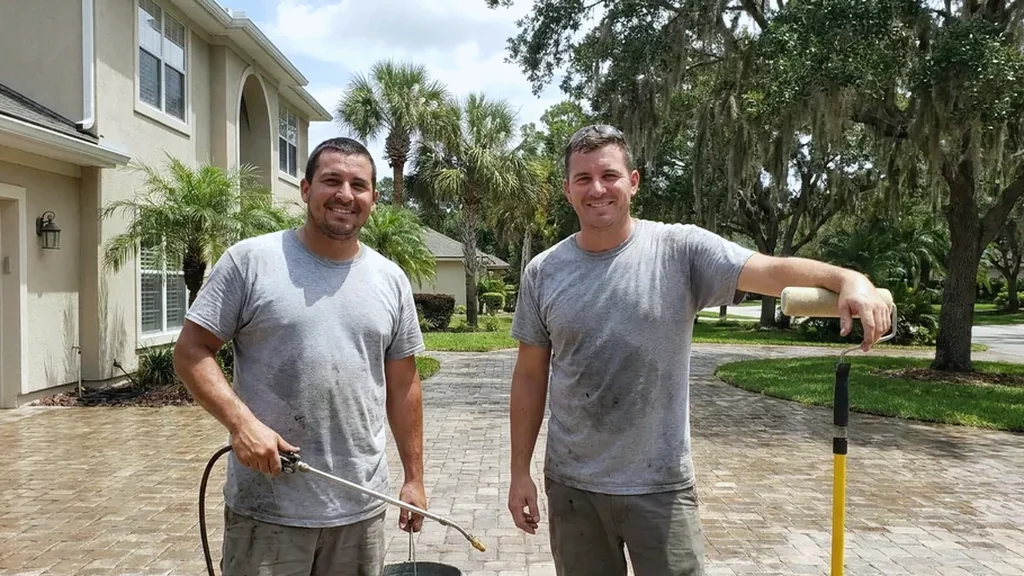
What is included when pavers are sealed in Crescent City?
Expect four stages: an inspection, deep cleaning, new joint sand and the coat of sealer. Cleaning eats the most hours. To go over each stage for your home, call (386) 977-8354.
Inspection
Square footage, sunken spots, cracked pavers, old sealer and standing water get recorded before pricing.
Deep cleaning
Mildew, leaf stains, rust and grime come off with cleaners made for concrete pavers and a gentle wash.
Joint sand
Kiln dried sand fills each gap so the stones interlock and weeds find less room.
Sealer coat
Sealer goes onto fully dry pavers in thin, even passes at the rate printed on the label.
How can I tell my pavers need sealing?
Watch for chalky color, joints below the paver edges, sand scattered across the drive after a storm and water that soaks in rather than beading. A paver company in Northeast Florida that installs Trident sealers says fast-soaking water signals a coat that is spent. Adding sand early is cheaper than resetting stones that have moved. For a quick opinion, call (386) 977-8354.
Which paver sealer works well in Florida humidity?
No single product suits every house, so ask which sealer the contractor plans to use and why. One Northeast Florida company works with Trident sealers in four finishes, from a glossy wet look to natural matte. Unilock, a paver maker, adds that solvent-based sealers can wear a bit longer, though they need pavers and joints that are bone dry. To weigh options for your pavers, call (386) 977-8354.
Sealers fall into two families. Film-forming products build a layer on top, cost more and give the wet look, while penetrating products soak in, cost less and need renewing sooner, per a regional price guide. That guide prefers penetrating products near pools, since a surface film can turn slippery. Ask which product goes on each area when you ask for a free estimate.
Wet look or natural finish: which suits my home?
Pick the wet look for rich, dark color with some shine, or natural matte to stay near the original look. Beside a screened pool, grip counts more than gloss, so a lower sheen is often safer. Members of an HOA should ask whether high gloss needs approval. To view samples of both, ask for a free estimate.
How often should pavers be resealed in Crescent City?
A regional price guide gives three to five years for most coats, near three for driveways and pool decks and near five for shaded patios. A Northeast Florida washing company calls two to three years typical, since full sun, pool chlorine and summer storms wear a coat faster. Your own interval turns on sun and traffic at each spot. To have your coat inspected, call (386) 977-8354.
Will extra coats of sealer protect pavers longer?
No. Thicker does not mean longer lasting. Unilock, a paver maker, connects too many layers with patchy gloss, and a second coat laid too early leaves a whitish film. One thin, even pass at the label rate is enough, so if a quote pitches three or four coats as added protection, ask why before you ask for a free estimate.
When is a good time of year to seal pavers in Crescent City?
The weather matters more than the month. Crescent City has hot, humid summers and mild winters, with about 50 inches of rain across the year, so the job needs a dry window more than a particular season. Newly laid pavers must also wait out efflorescence, which Unilock puts at two to three months and sometimes a year. If yours are newly installed, mention that when you call (386) 977-8354.
Unilock wants 24 to 48 hours of clear skies beforehand, up to 48 hours of dry weather afterward and temperatures from 50 to 90 degrees. Overheated pavers can stain or peel early, and sprinklers must stay off during the cure. A summer storm can delay the date by days. To choose a date that suits the forecast, ask for a free estimate.
Can sealing fix pavers that have sunk or spread apart?
No. Sealer cannot lift a low stone or close a gap. Pavers that wobble under a car or hold a puddle after rain need the base beneath them repaired, and sand only stays once they sit level. Find out if leveling sits inside the price or on its own line when you ask for a free estimate.
Which areas around a Crescent City home can be sealed?
Driveways, pool decks, patios by the water and front walks can all take a coat. Wear differs from one spot to the next, so each area gets its own plan. To start with the spot that matters most to you, ask for a free estimate.
Driveways
Tires, oil and open sun land on the driveway first. Sealing one pays off most where a truck or boat trailer turns and the joints loosen.
Pool decks and lanais
Pool pavers take splash, chlorine and bare feet all week. Sealing a deck here should leave grip underfoot, not a slick film.
Patios by the water
A patio facing the lake stays damp and collects leaves, moss and mildew. These spots usually need the longest scrub.
Front walks and entries
Walks collect mulch, soil and drips from planters. Sealing an entry walk is a modest job that every guest sees.
What causes paver trouble around Crescent City?
Five problems keep turning up near the lakes: green growth in damp shade, leaf and moss stains, sand loss after storms, orange sprinkler marks and sun fading. Each costs less to fix when caught early. To find the ones affecting your pavers, call (386) 977-8354.
1. Green growth in damp shade
Hot, humid summers and about 50 inches of yearly rain keep shaded pavers wet for long stretches. Algae and mildew begin in those corners, then creep into the sunny parts.
2. Leaf and moss stains under oaks
Crescent City is known for grand oaks draped in Spanish moss. Wet leaves left on pavers can stain them, and Western Interlock, a paver maker, ties leaf stains to tannins.
3. Sand loss after storms
A Northeast Florida washing company reports that summer downpours carry sand out of driveways and pool decks. As the joints empty, pavers shift and weeds root.
4. Orange spots from sprinklers
The same company blames iron in well water for orange marks on hard surfaces. Extra pressure makes them worse, so they get a rust cleaner before anything else.
5. Fading in open sun
A driveway with no shade bakes from sunrise to sunset, and bare pavers turn chalky there first. Full sun can pull a reseal closer to two years.
What does paver sealing cost in Crescent City?
Budget about $1.75 to $3.25 per square foot in Crescent City for cleaning, sand and sealer together, the range one Northeast Florida washing company lists. Size moves the rate, with small areas costing more per foot than a standard driveway. Stripping a failed coat adds $0.75 to $1.50 per square foot, and new joint sand adds $0.25 to $0.75, per a regional price guide. For a figure written for your home, ask for a free estimate.
The same guide cautions that bids below $1 per square foot usually leave out prep work. When a number looks low, ask which steps are missing. If you already hold a quote, call (386) 977-8354 and check it against these ranges.
Only need a wash? Paver cleaning and joint sand has its own guide, the service area list shows every town covered and the home page covers sealing in Crescent City.
| Paved area | Typical example | Clean, sand and seal |
|---|---|---|
| 300 sq ft | Small patio or walkway | $525 to $975 |
| 600 sq ft | Two car driveway | $1,050 to $1,950 |
| 1,000 sq ft | Large driveway or pool deck | $1,750 to $3,250 |
| 1,500 sq ft | Driveway plus pool deck | $2,625 to $4,875 |
Math based on the $1.75 to $3.25 per square foot that Northeast Florida paver companies publish. Your contractor sets the actual price after seeing the surface. Repairs, leveling and stripping failed sealer are usually extra.
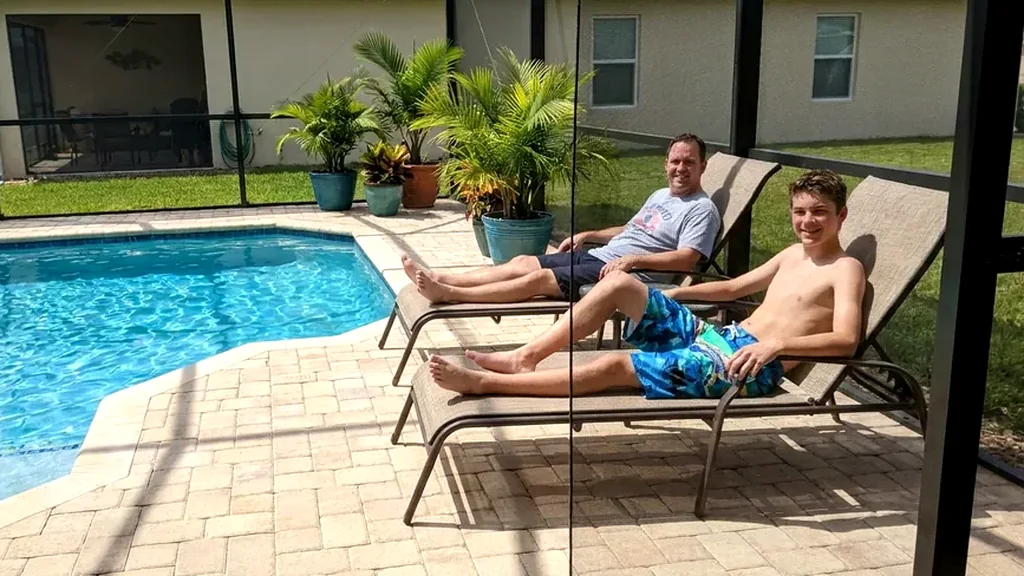
Why hire a contractor who works around the lakes?
A contractor active near Crescent City already plans for lake humidity, oak shade and summer storms. You still receive the price in writing and time to think. To start, call (386) 977-8354.
Contractors used to lake country
A company that works around Crescent City already deals with lake humidity and oak shade, so the first visit goes further.
A free look, a free number
The visit and the estimate cost nothing. If the price does not fit, say no and owe nothing.
Published rates to compare
Companies across Northeast Florida post their per square foot prices, and this site lays out that range. A quote well outside it is worth questioning.
You set the pace
Get the figure on paper and decide when you are ready. See what to confirm with any contractor.
Ready for a free paver sealing estimate in Crescent City?
Call or send the short form, and an answer arrives within 1 business day, usually much sooner.
Free, no obligation
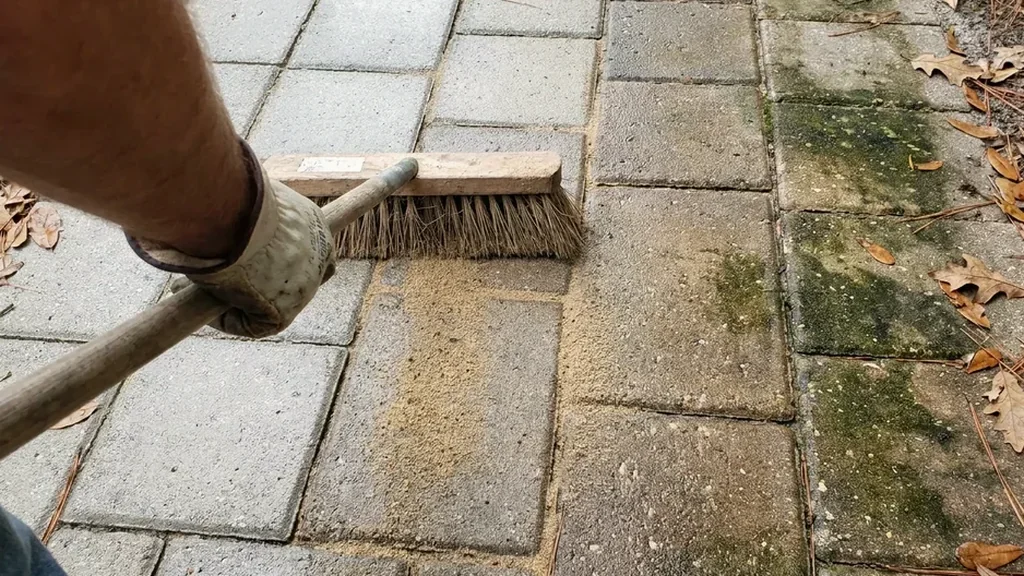
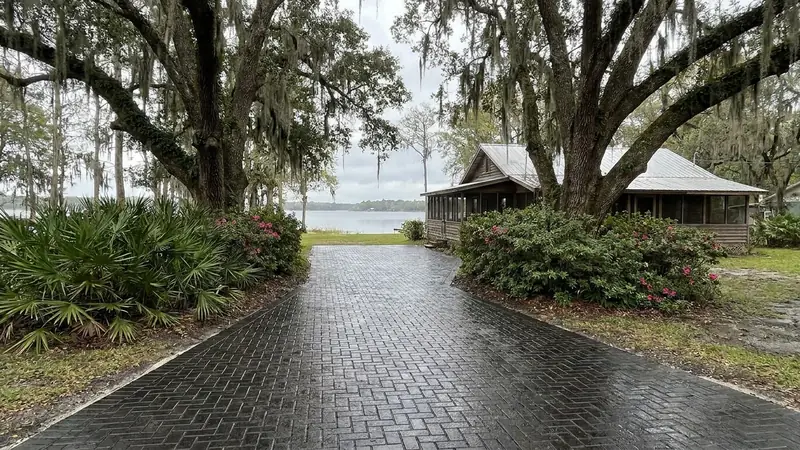
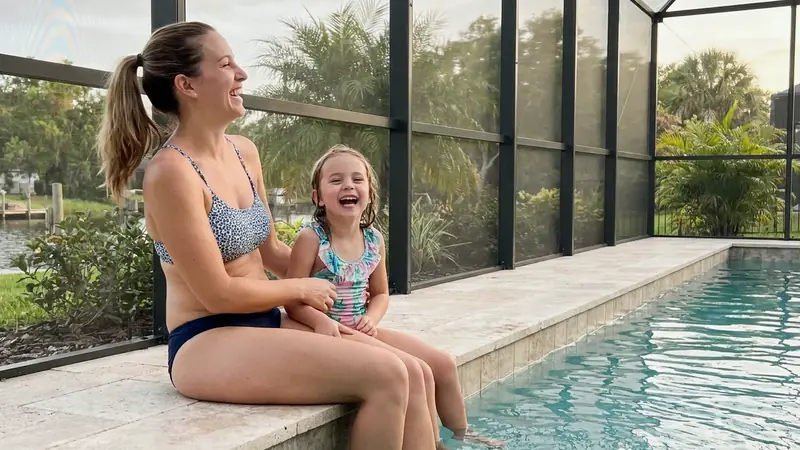
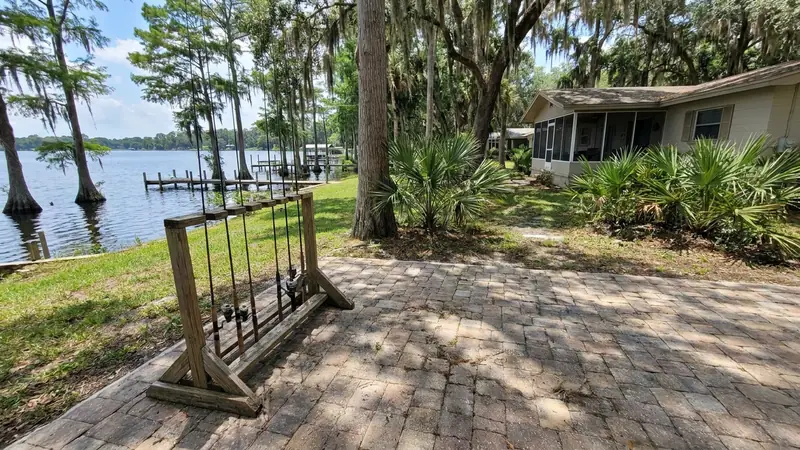
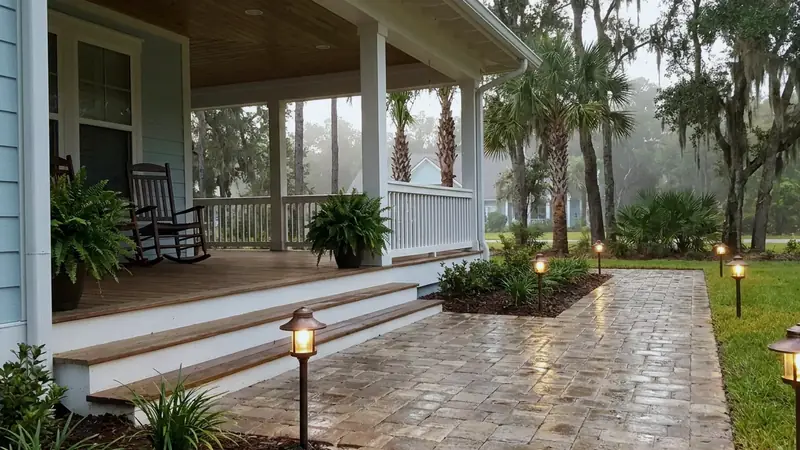
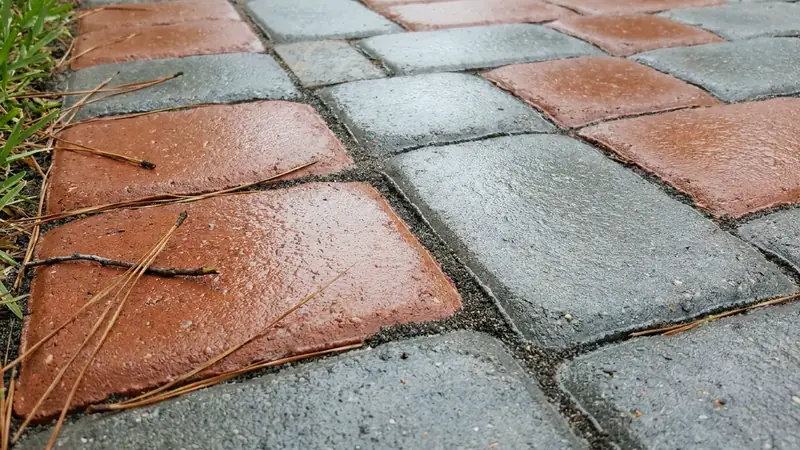
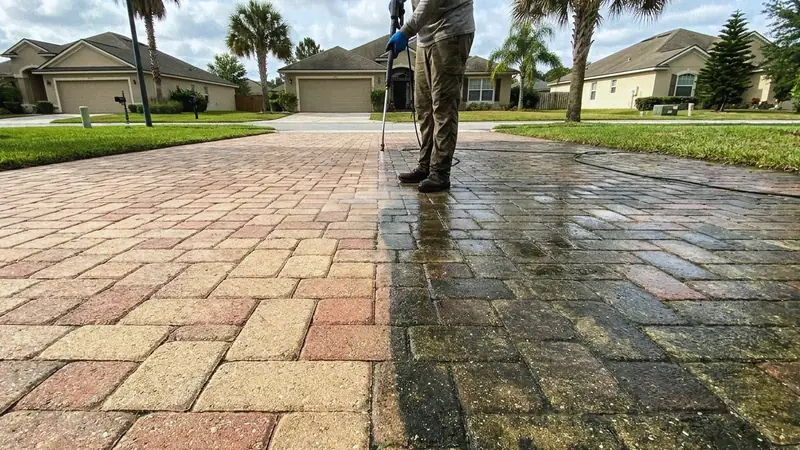
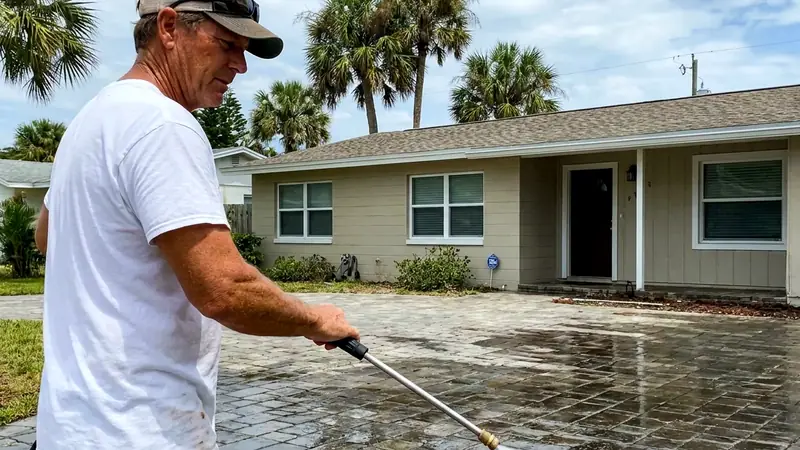
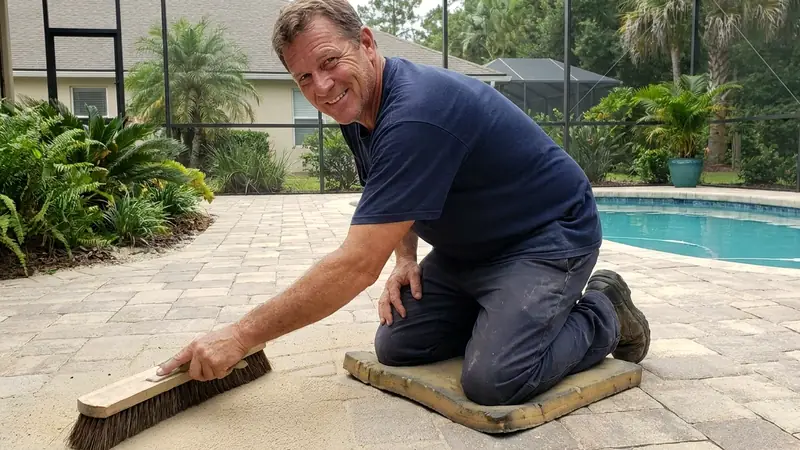
How do Crescent City pavers look after a fresh seal?
How does the paver sealing process work from start to finish?
Nearly every job runs the same five steps, from first inspection to a closing walk-through. To get on the schedule, call (386) 977-8354.
1. Measure and inspect
For the sealing quote, the contractor measures the area and notes dips, cracked pavers, old sealer and places where water collects.
2. Cover and wash
Plants and the garage door get covered, and the sprinkler timer goes off. A rotary surface cleaner then washes the pavers without blasting the joint sand away.
3. Treat stains
Rust, mildew, leaf marks and efflorescence each meet a cleaner made for them, tested first on a hidden patch.
4. Refill the joints
After the pavers dry, sand is swept in, packed down and topped off, and what is left over is blown clear.
5. Seal and review
If sealer is part of the job, a pump sprayer lays it on and a roller smooths it. The contractor walks it with you and names how long feet and cars must stay off.
Frequently Asked Questions
Is it good to seal pavers in Florida?
For most pavers, yes. Sun fades color, storms wash sand from the joints and humidity feeds algae, and a coat slows each of those. The price you pay is a repeat visit every few years.
How much to clean and seal pavers?
A Northeast Florida washing company lists $1.75 to $3.25 per square foot for the whole clean, sand and seal. That places a 900 square foot Crescent City driveway near $1,575 to $2,925. Stripping old sealer or fixing pavers costs more.
What do professionals use to seal pavers?
Most use a pump sprayer, often followed by a roller to level the coat. Unilock, a paver maker, names a sprayer or a foam or short nap roller. The product is water-based or solvent-based, and the contractor should say which.
How long do paver sealers last?
Two to five years, depending on sun, traffic and prep. A Northeast Florida washing company calls two to three years typical and says full sun and pool chlorine cut it short. Shaded walks can stretch to the long end.
Why is paver sealing so expensive?
Prep makes up most of the bill. Washing, stain work, new sand and drying time all come first, and a regional price guide adds $0.75 to $1.50 per square foot when failed sealer must be stripped.
How much should I pay for paver sealing?
A quote between $1.75 and $3.25 per square foot sits inside the published range. A regional price guide says bids under $1 per square foot usually skip prep, so ask what a low number leaves out.
How much to seal a pool deck?
A regional price guide puts pool decks near $1.50 to $3.00 per square foot and favors a penetrating sealer, because a surface film can turn slick. A 500 square foot deck would come to about $750 to $1,500.
Can pavers next to Crescent Lake or Lake Stella be sealed?
Yes. Ask how the contractor keeps wash water, cleaners and overspray out of the lake, and whether damp ground near the shore gets time to dry. Sealer needs a dry surface or it can turn milky.
Will humid weather near the lakes stop a sealing job?
It can move the date. Unilock wants 24 to 48 hours of clear skies before sealing, up to 48 hours dry afterward and temperatures from 50 to 90 degrees. With about 50 inches of rain a year here, a flexible schedule helps.
How long should I stay off pavers after sealing?
Allow a day or two. Unilock asks for up to 48 hours of dry weather as the coat cures, so park elsewhere and keep sprinklers off for that window. The label lists exact times.
Sealed pavers are a phone call away
Tell a contractor about your driveway or pool deck by phone or short form. The reply comes within 1 business day, usually much sooner, and the look costs nothing.
Free, no obligation